
More Than a Story: How Shared Book Reading Supports Communication
Darnisha Ruth, CCC-SLP • July 17, 2026
More Than a Story
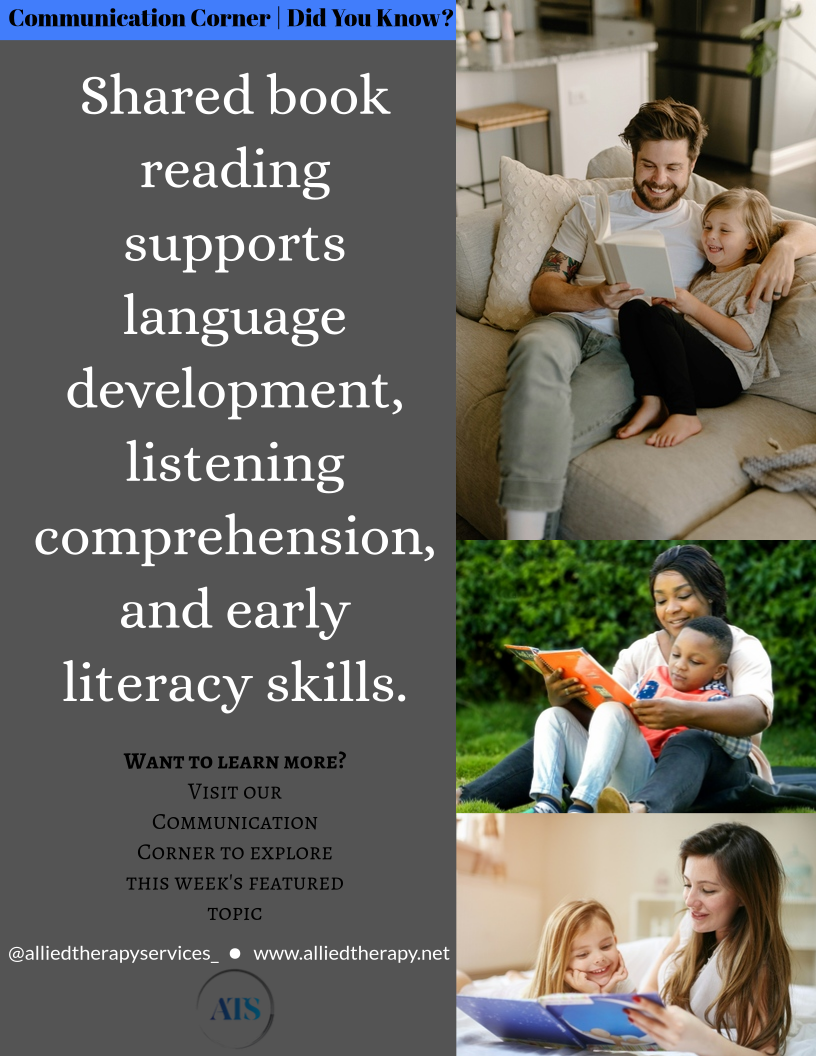
Reading together isn't just about learning words on a page—it's about building communication. Shared book reading creates opportunities for meaningful conversations that help children connect language with everyday experiences. Whether you're talking about the pictures, asking questions, making predictions, or retelling the story, these shared moments encourage curiosity, engagement, and a love of books while supporting communication in natural, everyday routines.
Why It Matters
Shared book reading offers many benefits, including:
- Expands vocabulary
- Strengthens listening skills
- Supports understanding and storytelling
- Builds early literacy skills
- Encourages meaningful parent-child interaction
What ASHA Says
The American Speech-Language-Hearing Association (ASHA) highlights the important connection between spoken language and literacy. Here's what parents should know:
📚 Spoken language is the foundation for reading and writing. Children develop stronger literacy skills when they have a solid foundation in listening, vocabulary, and oral language.
🗣️ Shared book reading builds communication. Reading aloud while asking questions, talking about pictures, and making predictions supports language development, listening comprehension, and emergent reading skills.
💡 Early literacy starts long before a child can read independently. Looking at books, understanding that print has meaning, recognizing letters, learning story structure, and matching spoken words to print are all important early literacy skills.
📖 Children with language difficulties are at greater risk for reading and writing challenges. Strong language skills support later success with literacy, making early language experiences especially important.
Who Can Benefit?
Shared book reading benefits children of all ages and communication abilities, including those who:
- Are developing early language and communication skills
- Are learning new words and expanding their vocabulary
- Are preparing for preschool or kindergarten
- Are beginning to read independently
- Have speech, language, or literacy challenges
- Benefit from extra support with listening, comprehension, or storytelling
- Enjoy spending quality time reading with a caregiver
No matter your child's age or communication level, reading together is a simple way to support language development and create meaningful moments of connection.
💙 Try This Today
Read together for a few minutes each day and ask questions like:
- "What do you think will happen next?"
- "Why is the character feeling that way?"
- "Can you tell me the story in your own words?"
Even discussing the pictures can help build communication skills.
At Allied Therapy Services, we are committed to providing evidence-based, family-centered speech and language services while helping parents better understand their child's communication development. If you have questions or concerns about your child's communication, we're here to help.
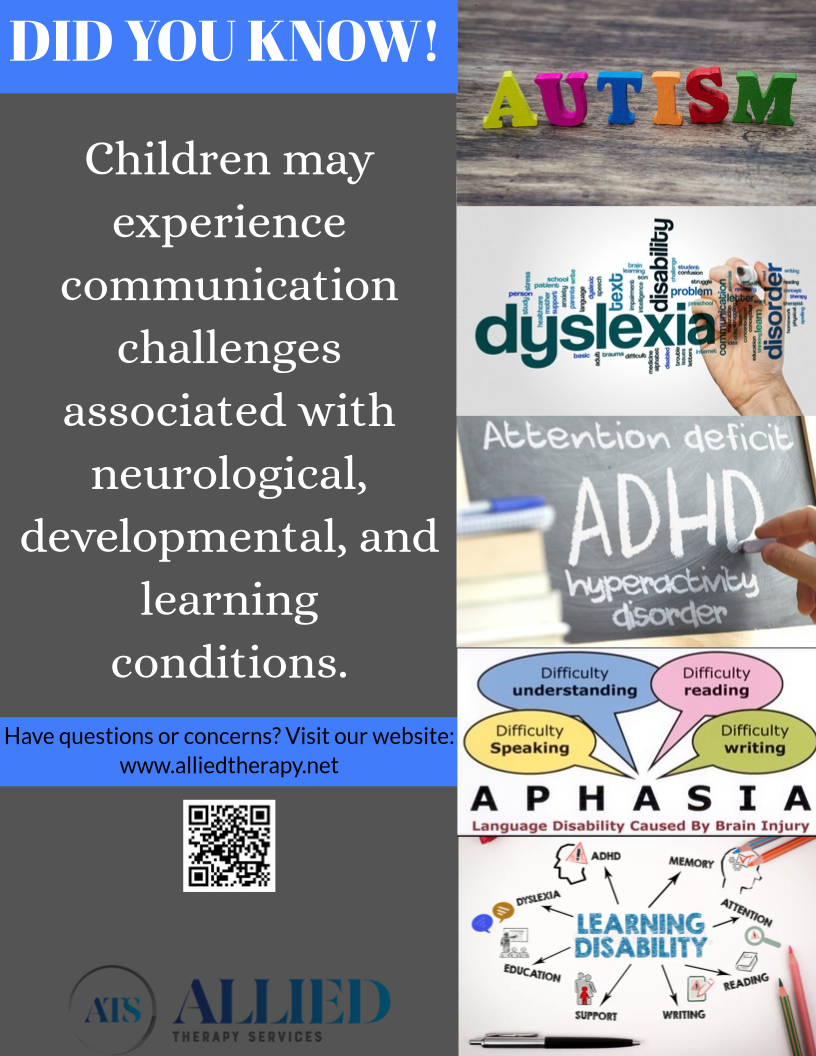
Learn how autism, ADHD, dyslexia, and other conditions can affect communication—and how speech therapy can help children thrive.
Be sure to visit Communication Corner weekly for new articles and updates as we continue empowering individuals through education.